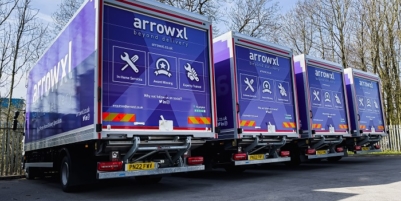
E-commerce companies urged to reduce parcel volumes to limit courier driver shortage’s impact on online deliveries
April 25, 2021
Research recently released by market intelligence agency, Mintel, shows that the Covid-19-inspired rise in online shopping has driven a boom in demand for UK courier and delivery services.
According to Mintel, the sector will be valued at £21 billion by 2024 and, with over four in ten British consumers saying that they have done more online shopping since the start of the pandemic and countless other surveys indicating that online sales are unlikely to drop significantly when high street stores eventually re-open, all the indications are that the surge in the need for courier and delivery services is not going to be a short lived phenomenon.
But, even before the switch to e-commerce over the last 12 months, the UK logistics industry had been struggling to recruit both LGV and standard courier drivers in sufficient numbers to satisfy the fulfilment demands of online retailers.
Now, with tens of thousands of extra home parcel deliveries being generated each day by click-happy shoppers, the shortage of trained and experienced drivers is being brought in to even sharper focus.
The logistics sector’s ongoing driver recruitment problem is having a particular impact on the last mile of a parcel’s journey through the online order fulfilment chain.
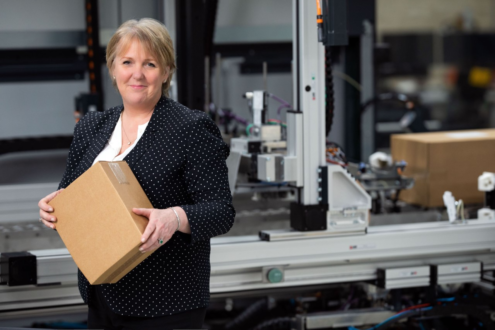
“For internet retailers a positive last-mile delivery experience is essential for building customer satisfaction and loyalty, but this is often one of the most challenging stages of the supply chain,” says Jo Bradley, Business Development Manager for packaging solutions at Quadient.
She continues: “If a shortage of courier drivers means customers do not receive their products fast enough, they will look elsewhere, so it is essential to make maximum use of the resources available. This means optimising the capacity of every delivery vehicle that leaves a parcel hub.”
One of the most obvious ways of doing this is for online retailers and their logistics partners to stop shipping orders in cardboard boxes that are way too big for the product or products that they contain.
“Delivery vehicles invariably ‘max out’ on volume long before they reach weight limits. Shipping empty space just doesn’t make sense and, quite simply, smaller parcels, means more orders on each van,” says Jo Bradley.
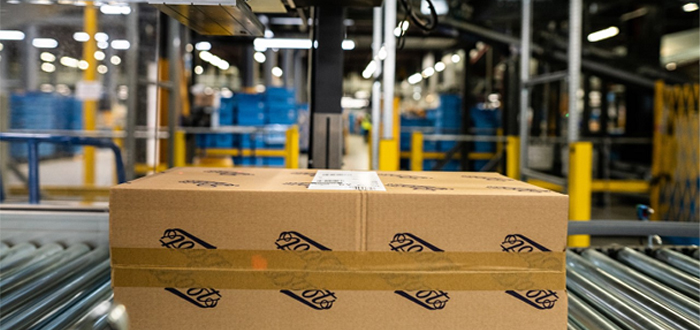
The technology now exists to create fit-to-size boxes for every order. “Typically, these machines offer reductions in shipped volumes of up to 50 per cent,” says Jo Bradley.
The CVP Impack and CVP Everest fit-to-size automated packaging systems from Quadient use 3D scanning technology to size, construct, weigh and label each individual order – whether of individual or multiple items. With a cycle time as short as three seconds the CVP Everest can do the work of up to 20 packing stations – constructing up to 1,100 fit-to-size boxes per hour.
And, of course, as well as being a valuable way of mitigating the impact of the driver shortage on the parcel delivery chain, lowering transport volume requirements is good for the environment.
Jo Bradley adds: “With the new tax ‘super-deduction’ policy that was announced in the UK Government’s recent Budget statement allowing companies to cut their tax bill by up to 25p for every £1 they invest in new machinery, there has never been a better time for online retailers or fulfillment specialists to adopt fit-to-size packaging technology.”