The United Kingdom Warehousing Association (UKWA) is calling on the Government to adopt new legislation that allows foodstuffs entering the country to be inspected at inland premises – instead of ports – to ease the flow of goods into post-Brexit Britain.
Speaking on the BBC’s Ten O’Clock News programme on August 21st UKWA CEO, Peter Ward, said: “Currently food inspections must be conducted within the port boundary, but after Brexit this will be impractical.”
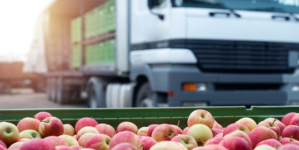
He continued: “For example, 44 per cent of what the nation eats enters the UK at Dover from the EU. This is the equivalent of 1000 trucks per day through the port on ferries and the tunnel.
“Inspecting this food in a manner consistent with Rest Of World (ROW) rules from March 2019 is going to present a major challenge.
“For instance, the port of Dover doesn’t have the necessary plug-in points to power temperature-controlled vehicles, which means the only way to ensure that food remains cool while awaiting inspection will be to keep diesel engines running – which will add cost and impact on the environment.
“The lack of adequate inspection facilities at Ro/Ro ports, such as Dover, will result in unprecedented delays and after Brexit there will simply not be sufficient capacity nor the infrastructure to cope, so an interruption in food supply chains seems inevitable.”
Allowing food inspections to be carried out at inland storage facilities would, UKWA contend, allow existing storage premises to be adapted to accommodate inspection regimes and deliver the necessary extra capacity more quickly.
But Peter Ward acknowledges that, given the huge volumes involved, any new inland food inspection facilities would have to be located close to both power supply and a sustainable labour pool, which in turn will trigger other concerns.
“The question is how resistance of local residents to large warehousing and distribution developments will be balanced against the need to ensure the nation continues to be fed,” he said.
Peter Ward added that UKWA is consulting with the Government and providing feedback from its members on a range of issues.
He said: “UKWA is here to help the Government to understand the perspective of the industry on the real impact Brexit is likely to have, particularly on food supply chains. By supplying the necessary detail we hope that we will contribute to the formulation of a coherent and effective policy.”
In the meantime, UKWA is advising its members to prepare for a no-deal Brexit and the 300,000 business that currently trade with the EU only to classify goods per UCC (Unified Customs Code), apply for deferment accounts and find partners and/or trade association that can help them prepare for the potentially difficult times ahead.